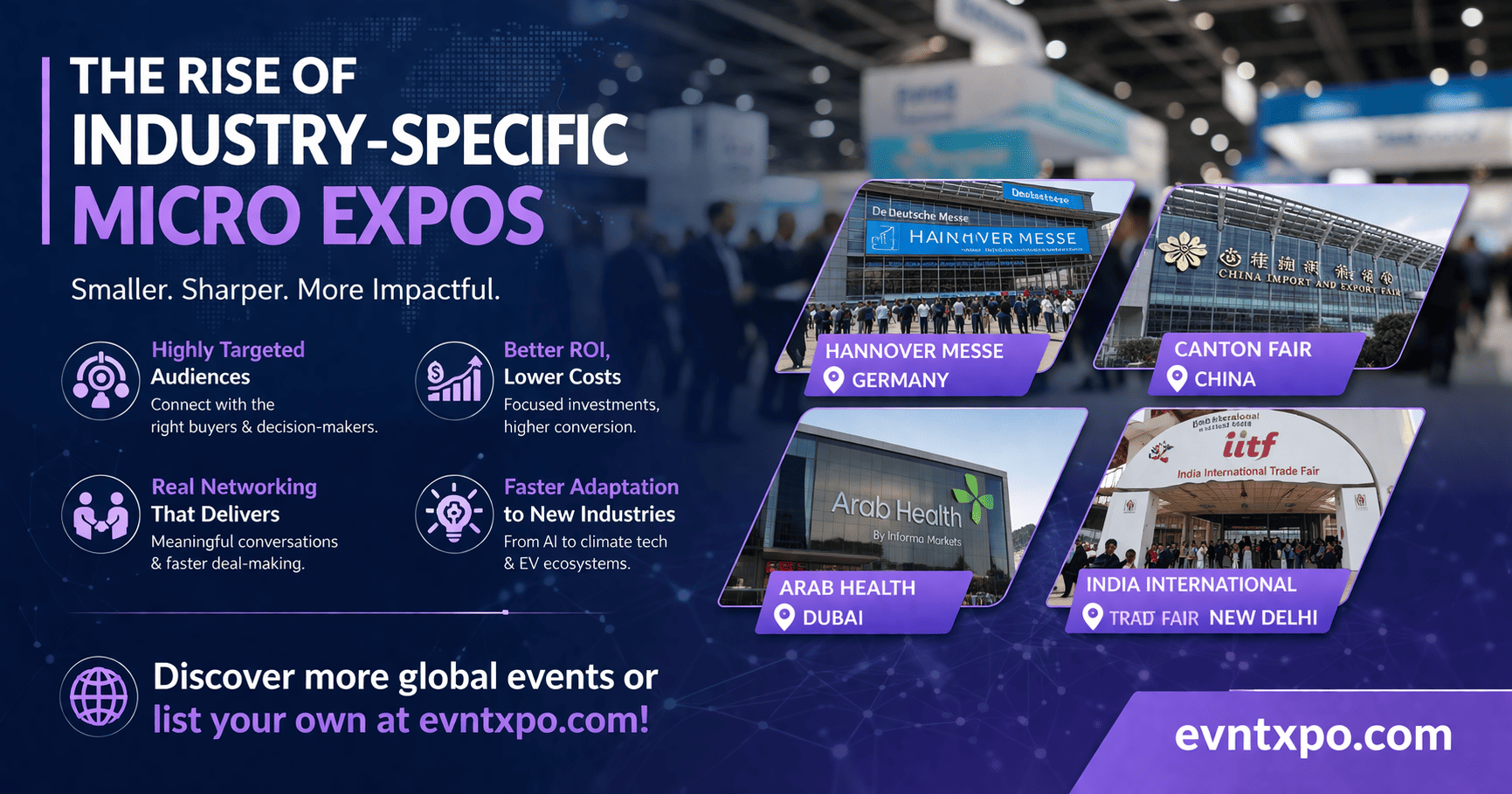
Micro expos are smaller, highly focused exhibitions designed around a specific industry, niche, or technology segment. Unlike traditional trade fairs that cater to broad sectors, these events bring together a carefully curated audience of stakeholders, including decision-makers, specialized suppliers, and targeted buyers.
They prioritize quality over quantity, offering an environment where business interactions are more relevant, efficient, and outcome-driven.
One of the biggest advantages of micro expos is their ability to attract a highly specific audience. Instead of engaging with a broad and often unrelated visitor base, exhibitors can connect directly with professionals who have a genuine interest in their niche.
Participating in large-scale exhibitions often involves significant costs—booth design, logistics, staffing, and marketing. Micro expos, on the other hand, are more cost-effective while delivering higher-quality leads, resulting in better overall ROI.
In massive venues like Messe Frankfurt, networking can sometimes feel overwhelming and impersonal. Micro expos create a more intimate setting that encourages meaningful conversations, stronger relationships, and faster deal-making.
Micro expos are inherently more flexible. They can quickly adapt to emerging industries such as artificial intelligence, electric mobility, renewable energy, and climate technology—often faster than larger, more established exhibitions.
Despite their rapid rise, micro expos are not replacing large-scale trade fairs. Instead, they are complementing them by creating a more balanced and strategic exhibition ecosystem.
This two-tier model allows businesses to align their exhibition strategies with specific goals—whether it’s brand awareness or direct business generation.
The shift toward micro expos is not limited to Europe—it is a global phenomenon.
In China, large platforms like Canton Fair are increasingly complemented by smaller, industry-specific sourcing fairs and regional B2B events.
In the Gulf region, alongside major exhibitions like Arab Health, niche events focusing on sectors such as healthcare technology, logistics, and sustainability are gaining traction.
In India and broader Asia, while flagship events like India International Trade Fair continue to thrive, there is a noticeable rise in specialized expos targeting sectors like EVs, startups, fintech, and manufacturing sub-segments. check global expo https://www.evntxpo.com/events-around-the-world
As industries become more specialized and business goals more precise, the demand for focused, high-impact events will continue to grow. Micro expos represent a shift toward efficiency, relevance, and measurable outcomes in the exhibition space.
The future of the exhibition industry will not be defined by size alone, but by how effectively events connect the right people at the right time.
The rise of industry-specific micro expos marks a fundamental evolution in the global exhibition landscape. While large trade fairs remain essential for global exposure, micro expos are redefining how businesses engage, network, and grow.
In an increasingly competitive and information-saturated world, relevance is the new currency—and micro expos are leading the way.